As parents, we often marvel at the rapid pace of our children's growth, both physically and mentally. Among the many milestones they achieve, one of the most exciting is their early grasp of math concepts. It might sound surprising, but long before formal schooling begins, toddlers start building a foundational understanding of math, especially through shapes and patterns. Encouraging this development early on is not just about preparing them for school but also fostering critical thinking and problem-solving skills. In this article, we’ll explore how babies and toddlers learn math concepts like shapes and patterns, how parents can nurture these skills at home, and why this early exposure is crucial for their cognitive development.
1. The Importance of Early Math Milestones
Why Start Early?
Studies show that early math skills are a strong predictor of future academic success. Children who are introduced to mathematical thinking at a young age tend to do better in school later. Early math is not about numbers and equations; it's about helping children recognize relationships, make comparisons, and observe patterns in the world around them.
Math in Everyday Life
Math is everywhere in a child’s daily life, from stacking blocks to sorting toys. Encouraging toddlers to explore shapes and patterns is a fun and effective way to build their math skills without the pressure of formal lessons.
2. Baby Milestones: Exploring Shapes
Understanding Shapes: A Building Block for Spatial Awareness
Around the age of 9 to 18 months, many babies begin to recognize and differentiate between basic shapes like circles, squares, and triangles. This understanding is a key cognitive milestone, as it builds spatial awareness and forms the foundation for geometry and problem-solving skills in later years.
Activities to Encourage Shape Recognition:
- Shape Sorting Toys:
These classic toys encourage babies to match objects with corresponding holes, helping them differentiate between different shapes while improving their motor skills.
- Shape Puzzles:
Simple puzzles featuring basic shapes (circles, squares, triangles) are great for hands-on learning. They help children see how shapes fit together and develop their hand-eye coordination.
- Pointing Out Shapes in the Environment:
Everyday objects like wheels (circles), doors (rectangles), and rooftops (triangles) provide excellent opportunities for learning. Pointing out these shapes during playtime or on walks helps toddlers connect real-world objects to geometric concepts.
The Role of Language in Learning Shapes
Language plays a crucial role in teaching children about shapes. When parents consistently name and describe shapes during playtime, babies quickly begin to understand that different forms have distinct names and characteristics. For example, you might say, "This ball is a circle, and this box is a square."
3. Patterns: Recognizing and Creating Order
What Are Patterns?
Patterns involve the repetition of shapes, colors, or objects in a particular sequence. They are an essential concept in early math because they help children understand order, predictability, and logic. Babies and toddlers naturally notice patterns in their surroundings, from the stripes on their toys to the beats in music.
When Do Babies Start Noticing Patterns?
Between 12 to 24 months, many toddlers begin to recognize simple patterns, such as alternating colors or repeated sounds. By the age of 2 or 3, they may even be able to create their own patterns with blocks, beads, or crayons.
Fun Pattern Activities for Toddlers:
- Building Block Patterns:
Encourage your toddler to create patterns with building blocks by alternating colors or shapes (e.g., red-blue-red-blue). Ask them to predict what comes next in the sequence.
- Clapping and Music Patterns:
Clapping to a beat or following simple rhythms in music helps children recognize patterns in sounds. Try alternating fast and slow claps or creating a pattern with musical instruments like drums and tambourines.
- Sorting and Organizing Toys:
Sort toys or objects by color or size and arrange them in a repeating sequence. For instance, line up cars by alternating between red and blue, or group soft and hard toys in a pattern.
Why Pattern Recognition Is Crucial ?
Understanding patterns lays the groundwork for many important life skills, including problem-solving and logical reasoning. By recognizing and predicting sequences, toddlers learn how to anticipate outcomes, a skill that’s not only useful in math but in all aspects of their development.
4. Integrating Shapes and Patterns into Daily Life
Shapes and Patterns in Playtime
Toddlers love to explore, and their playtime offers endless opportunities to introduce math concepts. Blocks, shape sorters, and puzzles are excellent tools, but everyday objects like spoons, plates, and blankets can also be used to explore shapes and patterns.
Books and Media
There are many children's books and videos that focus on shapes and patterns. Storytime is a wonderful opportunity to reinforce these concepts. Books that ask questions like "What shape is this?" or have repetitive storylines can engage toddlers while helping them notice patterns.
Incorporating Math into Routine Tasks
Daily routines offer plenty of opportunities to teach math. During snack time, you can count the number of crackers, create patterns with pieces of fruit, or cut sandwiches into different shapes. Bath time is another fun moment to experiment with floating shapes and making patterns with bath toys.
5. Supporting Early Math Learning: Tips for Parents
- Make It Fun
Math should be fun, not forced. Incorporating shapes and patterns into everyday activities and play keeps toddlers engaged and excited about learning.
- Encourage Curiosity
Ask open-ended questions like, "What do you think comes next?" or "Can you find another triangle in the room?" This stimulates critical thinking and curiosity.
- Positive Reinforcement
Praise your child's efforts, no matter how small. Celebrate their attempts to recognize shapes or create patterns, and be patient as they practice these skills.
- Practice Patience and Repetition
Repetition is key in early learning. Children need multiple exposures to a concept before fully understanding it, so keep revisiting shapes and patterns in different contexts.
Conclusion
Introducing your toddler to early math concepts like shapes and patterns is an essential step in their cognitive development. Through fun and engaging activities, you can nurture their curiosity and set them on a path toward strong math skills that will benefit them in school and beyond. By integrating these concepts into daily routines and play, you're not only helping them learn but also fostering a lifelong love of exploration and discovery.Encourage your little one to explore the world of shapes and patterns—after all, it's the foundation of the mathematical world they'll soon conquer!
Explore more parenting tips and activities for your child’s development on kidsnames.in, where you’ll find fun, educational ideas for every milestone!
Popular Posts
The Importance of Outdoor Exploration
As parents, we cherish every milestone in our baby...
Date | 12 Oct 2024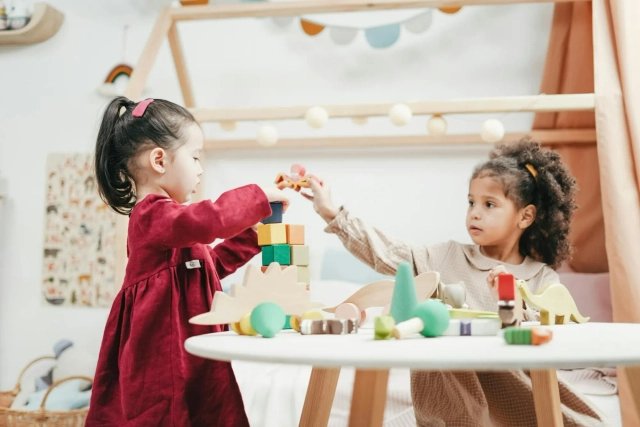
Developing Imagination Through Play
As your little one grows, each milestone they achi...
Date | 11 Oct 2024